

By 365 Construction Team
Published: July 27, 2026
Last updated: July 27, 2026
Estimated reading time: 8 minutes
Choosing between different home styles in Saskatoon is more than just an aesthetic decision. Here in Saskatchewan, our homes have to do more than just look good; they have to withstand temperature swings of eighty degrees, resist high prairie winds, and keep a family warm when the mercury hits -40°C.
At 365 Construction, we approach every build and renovation with a "no-nonsense" perspective. While we appreciate the beauty of various architecture styles, our primary focus is always on structural function and longevity. Whether you are planning a new build in Brighton or looking into home renovations in Saskatoon for a character house in Nutana, understanding how different house types perform in our climate is the first step toward a successful project.
Table of Contents
- What Defines an Architectural Style?
- The Enduring Appeal of the Craftsman Style
- Prairie and Rancher Styles: Built for the Horizon
- Modern Farmhouse: Familiar Form, Updated Performance
- Tudor Style: Character That Needs Careful Upgrading
- Mid-Century and Bungalow Homes: Practical Layouts That Still Work
- Modern and Contemporary: The Evolution of Suburban Architecture
- Style Comparisons That Matter in Saskatoon
- The Saskatoon Reality Check: What Really Matters
- How to Choose the Right Style for Your Family
- Building for Peace of Mind
What Defines an Architectural Style?
An architectural style is the combination of shape, roofline, window layout, materials, and detailing that gives a home its overall identity. In practical terms, it affects how a house sheds snow, handles wind, manages heat loss, and supports daily family life.
That matters in Saskatoon. A style is not just about curb appeal. It influences insulation strategy, window performance, maintenance demands, and how easily a home can be upgraded over time. We always look at style through that functional lens first, then refine the visual side with durable materials and precise finishing.
The Enduring Appeal of the Craftsman Style

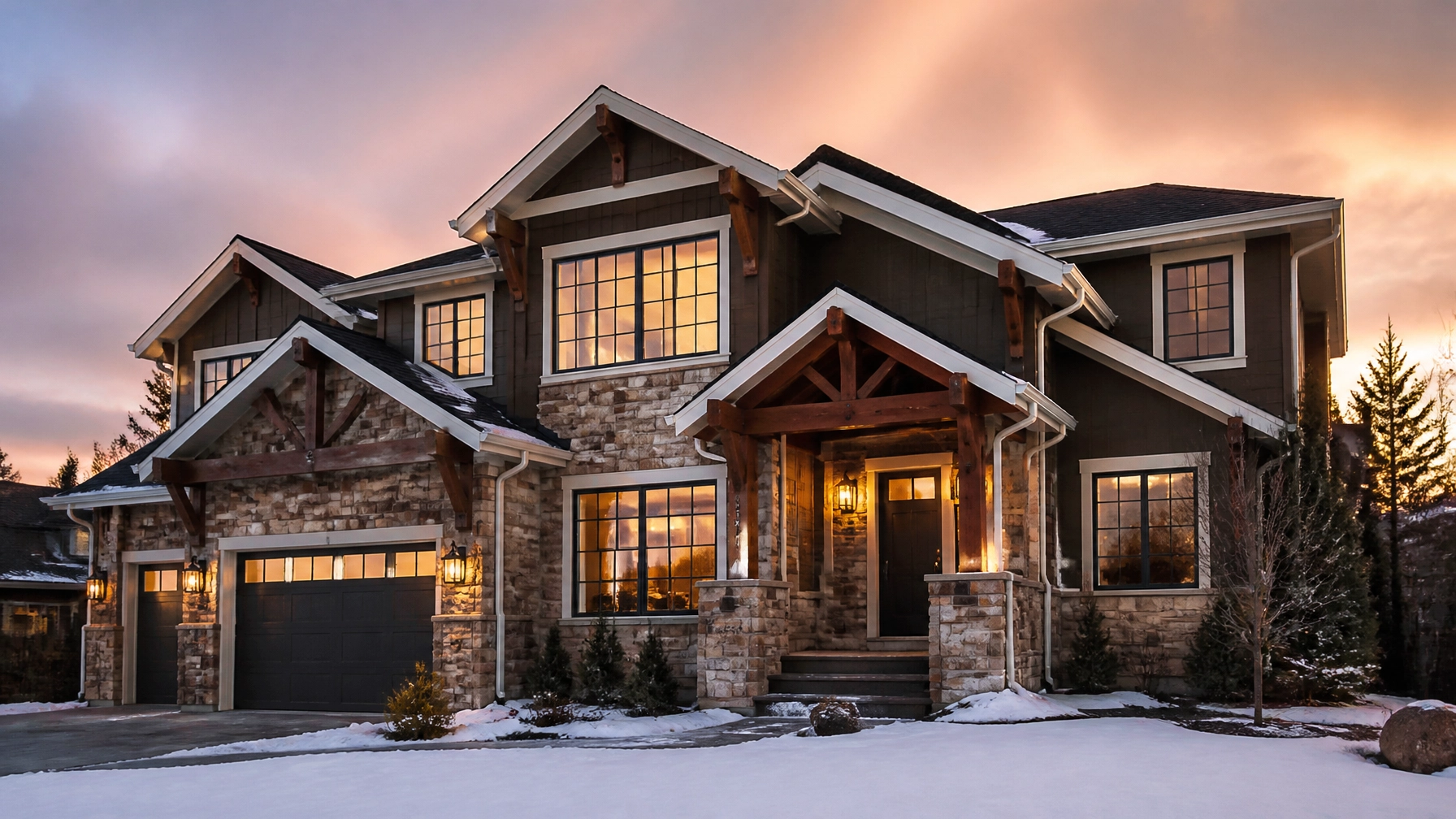
If you walk through neighborhoods like Nutana, Caswell Hill, or Varsity View, you will see a high concentration of Craftsman and Arts & Crafts styles of homes. These houses were built primarily between 1905 and the early 1920s, and their continued presence is a testament to their durable design.
Key characteristics of the Saskatoon Craftsman include:
- Low-pitched, gabled roofs: These are excellent for managing snow loads when engineered correctly.
- Deep eaves: These protect the siding from the elements and provide natural shading during our high-sun summers.
- Tapered columns and large porches: A hallmark of the style that fosters a sense of community.
- Natural materials: The use of brick, stone, and cedar is common, providing a rugged exterior that ages gracefully.
From a renovation perspective, these homes often require a focus on "behind-the-walls" upgrades. If you are considering home improvement in Saskatoon for a Craftsman house, we often recommend starting with the envelope: replacing old lath-and-plaster with modern insulation and ensuring the vapor barrier is continuous. Our European craftsmanship ensures that when we restore these details, the "invisible" elements like sealing and thermal bridging are handled with precision.
Prairie and Rancher Styles: Built for the Horizon
The Prairie style, famously influenced by Frank Lloyd Wright, feels at home in Saskatoon. These homes emphasize horizontal lines that mimic the flat landscape of the plains. Similarly, the Rancher or Bungalow style became a staple in mid-century developments across the city.
For a homeowner, the Prairie style offers:
- Grouped windows: Perfect for capturing the bright Saskatchewan sun.
- Simple forms: Fewer corners and complex rooflines mean fewer opportunities for heat loss and water ingress.
- Open floor plans: These allow for better airflow and heat distribution throughout the home.
The single-story layout of a Rancher is a pragmatic choice for many families and older residents. It simplifies maintenance and removes the need for stairs, making it a "forever home" candidate. When we handle Residential Renovations for these different house types, we often look at ways to enhance the horizontal aesthetic while upgrading the R-value of the walls to meet modern energy standards. The benefit is a layout that stays easy to use, efficient to heat, and reliable over the long term.
Modern Farmhouse: Familiar Form, Updated Performance
Modern Farmhouse has become one of the most requested home styles in newer Saskatoon developments. It blends simple rural forms with cleaner detailing, larger windows, and more open interiors. Done properly, it feels warm without becoming overly decorative.
Common features include:
- Simple gable rooflines: Straightforward to frame and easier to weatherproof than highly complex roof designs.
- Vertical siding and durable cladding accents: Often a mix of board-and-batten, fiber cement, wood details, or metal.
- Functional porches: Useful as transitional spaces in a city where boots, snow, and wind are part of daily life.
- Open main floors: Good for family use, but they need proper HVAC planning so heat is distributed evenly.
In our climate, Modern Farmhouse works best when the details stay disciplined. Oversized overhangs, strong flashing, and durable trim matter more than decorative touches alone. With careful planning, this style gives homeowners a welcoming look with a weather-tight shell and manageable maintenance.
Tudor Style: Character That Needs Careful Upgrading
Tudor homes stand out for their steep rooflines, pronounced entryways, masonry, and half-timber-style detailing. In older Saskatoon neighborhoods, they often carry strong character and solid street presence, which can help with long-term appeal.
What defines a Tudor home:
- Steeply pitched roofs: Good for shedding snow, but they need proper ventilation and flashing details.
- Tall, narrow windows: Attractive, though performance depends on modern glazing upgrades.
- Brick, stucco, and decorative wood trim: Durable when maintained, but vulnerable where water management has been ignored.
- Compartmentalized layouts: These can suit families who want quieter rooms and clearer separation between spaces.
From a renovation standpoint, Tudor homes need close attention around insulation transitions, attic airflow, and moisture control behind older wall systems. We often improve comfort by upgrading windows, air sealing the envelope, and preserving visible character while rebuilding the hidden assemblies to modern standards. The result is a home that keeps its identity while becoming more efficient and dependable.
Mid-Century and Bungalow Homes: Practical Layouts That Still Work
Mid-century homes and bungalows remain common across Saskatoon, and for good reason. Their straightforward construction, efficient footprints, and adaptable layouts make them practical candidates for renovation.
These different house types are known for:
- Low, wide profiles: Less visual fuss and often simpler structural lines.
- Large main-floor living spaces: Useful for families who want everyday function without wasted square footage.
- Big windows and indoor-outdoor connection: A strength of mid-century design, provided the glazing is upgraded for winter performance.
- Basement potential: Many bungalows offer solid opportunities for added living space, storage, or secondary suite planning where permitted.
The tradeoff is that many of these homes were built before current insulation and air-sealing standards. We often find thermal weak points at rim joists, older basements, and original window openings. When those areas are corrected with precision, these houses become comfortable, efficient, and easier to future-proof.
Modern and Contemporary: The Evolution of Suburban Architecture

In newer neighborhoods like Brighton or Evergreen, the building styles architecture leans toward Modern and Contemporary designs. These homes prioritize clean geometric lines, minimalist detailing, and the integration of smart home technology.
Modern homes in Saskatoon typically feature:
- Floor-to-ceiling windows: These are stunning but require high-performance triple-pane glass to prevent them from becoming "refrigerators" in the winter.
- Mixed materials: Combining steel, glass, and concrete with natural wood accents.
- Sustainability: Many modern builds focus on being Net-Zero ready, utilizing advanced home styles that minimize environmental impact.
The challenge with modern architecture styles in a cold climate is the "starkness." At 365 Construction, we use our sharp eye for detail to ensure that modern doesn't mean cold. We incorporate warm textures and ensure the structural seals are tight, so your minimalist sanctuary stays weather-tight and cozy regardless of the wind chill.
Style Comparisons That Matter in Saskatoon
Modern vs. Contemporary
These two labels are often used interchangeably, but they are not quite the same.
Modern usually refers to a defined design language: flat or low-slope roofs, minimal ornament, strong geometry, and a restrained material palette.
Contemporary is more flexible. It reflects current trends, which means it can borrow from Modern, Scandinavian, industrial, or even farmhouse influences.
From a construction standpoint:
- Modern homes often demand tighter detailing because large glass areas and minimal trim leave less room for error.
- Contemporary homes can be easier to adapt because the style allows more variation in form and materials.
- For Saskatoon winters, both need excellent insulation, air sealing, and window selection to avoid cold spots and condensation.
The practical benefit is clarity. When you know which direction you are choosing, it becomes easier to budget properly and avoid design decisions that do not suit our climate.
Craftsman vs. Tudor
Craftsman and Tudor homes both carry strong character, but they age and perform differently.
- Craftsman homes tend to emphasize natural materials, broad porches, and visible wood detailing.
- Tudor homes lean toward steeper roofs, masonry, and more vertical proportions.
- Craftsman layouts often feel a bit more open and informal.
- Tudor interiors are usually more segmented, which some families prefer for privacy and noise control.
In renovation work, Tudor homes can involve more intricate exterior transitions and moisture-sensitive assemblies. Craftsman homes often require careful restoration of wood features and envelope upgrades behind finished walls. The benefit to the homeowner is knowing where maintenance dollars are likely to go before the work begins.
Prairie vs. Modern Farmhouse
Prairie and Modern Farmhouse can both feel clean and family-friendly, but they create that feeling in different ways.
- Prairie style is more horizontal, grounded, and tied to the landscape.
- Modern Farmhouse relies on simple rural forms, gables, and a more familiar residential look.
- Prairie homes often suit homeowners who want understated design and broad visual lines.
- Modern Farmhouse tends to appeal to families who want warmth, openness, and flexible resale appeal.
In Saskatoon, both can work well if the shell is built properly. Prairie designs often benefit from simpler massing, while Modern Farmhouse homes need disciplined detailing around porches, siding transitions, and roof edges. The payoff is a home that fits your taste without sacrificing durability.
The Saskatoon Reality Check: What Really Matters
Regardless of the home styles you prefer, the success of your property in Saskatchewan comes down to technical execution. We believe in "prevention over cure," and that starts with three key areas:
1. The Building Envelope (Insulation and Sealing)

In Saskatoon, a "standard" build is rarely enough. We advocate for higher R-values in attics and walls than the minimum code requires. A well-installed vapor barrier is the most important "invisible" element in your home. It prevents warm, moist indoor air from hitting cold exterior surfaces, which causes rot and mold inside your walls.
2. High-Performance Windows
Windows are the weakest point in any home's thermal defense. For our climate, triple-pane windows with low-E coatings and argon gas fills are not a luxury: they are a necessity. They reduce drafts, eliminate condensation, and keep your energy bills manageable.
3. The Mudroom: A Pragmatic Necessity

Every Saskatoon home needs a "buffer zone." A well-designed mudroom with durable tile, underfloor heating (to dry out wet boots), and ample storage for heavy parkas and hockey gear is essential. It keeps the grit and slush out of your main living spaces, preserving your floors and keeping your home cleaner.
How to Choose the Right Style for Your Family
When choosing between home styles, ask yourself these questions:
- What does the neighborhood dictate? If you are in a character area, a Craftsman or Tudor style will maintain your home's resale value. In a new development, Modern or Contemporary might be the standard. Matching the context of the area usually protects long-term value and makes approval or resale easier down the road.
- What is your maintenance budget? Intricate wood trim on a Craftsman requires more painting and upkeep than the clean metal or stone surfaces of a Modern home. The right answer is not always the most striking style. It is the one you can maintain properly over ten or twenty years.
- How do you live? Families often benefit from the "segmented" privacy of older different house types, while those who entertain might prefer the open-concept flow of a Modern Farmhouse or Prairie style. Daily function matters more than trend cycles.
- What is your renovation or build budget? Some styles are more forgiving than others. Simple forms, straightforward rooflines, and standard window sizes are usually more cost-efficient to build and easier to keep weather-tight. Homes with complex roof geometry, specialty trim, or large custom glazing packages generally cost more up front and leave less room in the budget for upgrades behind the walls.
- How will this choice affect resale value? In Saskatoon, broad appeal still matters. Bungalows, well-executed Modern Farmhouse homes, Craftsman-influenced exteriors, and practical Contemporary homes often attract a wide range of buyers. Very niche design choices can still work, but only if the execution is solid and the layout remains functional.
- Is the home future-proof? A good style should still serve you when your needs change. We encourage homeowners to think about aging in place, adaptable main-floor spaces, energy upgrades, and the ability to replace materials without tearing apart the whole exterior. Future-proofing means lower surprise costs, better comfort, and more peace of mind.
Building for Peace of Mind
At 365 Construction, we’re more than just builders: we’re a family-oriented team that understands the value of a solid, reliable home. We bring European craftsmanship to every project, ensuring that the "behind-the-walls" details are just as beautiful as the finishings.
Whether you are looking to start a new project or need expert advice on home renovations in Saskatoon, we are here to help you turn your vision into a durable reality. Choosing the right architectural style is the beginning; building it to last a lifetime is our specialty.
If you’re ready to discuss how to make your home more comfortable, durable, and stylish, contact us today for a consultation. It’s the logical next step for your peace of mind.