

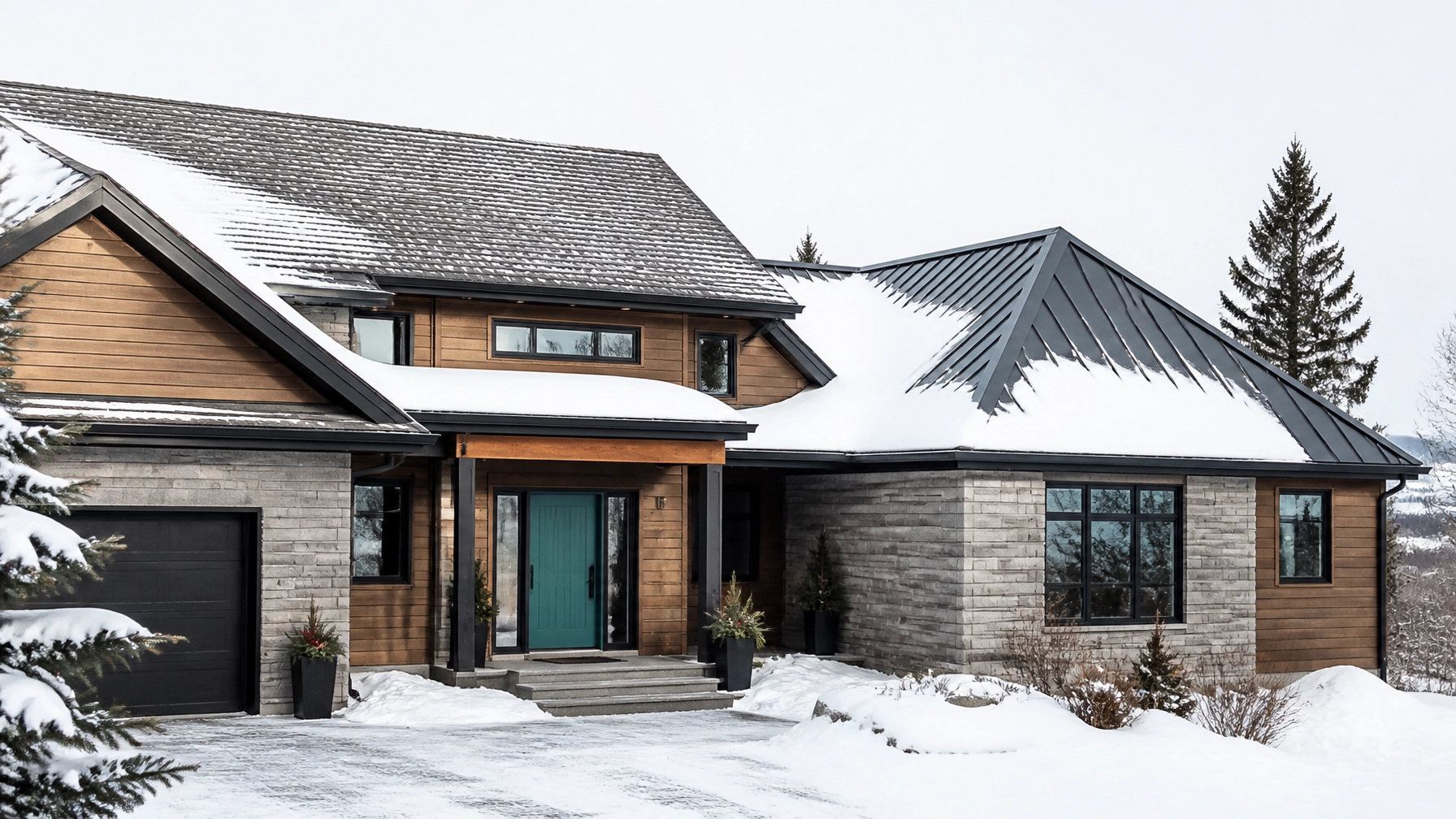
By 365 Construction Team
Published: August 17, 2026
Updated: August 18, 2026
Estimated reading time: 10 minutes
A Saskatoon roof has to do more than look good from the street. It must manage snow, wind, ice, moisture, and repeated freeze-thaw cycles without creating problems inside the home.
The best roofing material depends on more than the product itself. Roof pitch, framing capacity, attic ventilation, underlayment, flashing, and installation quality all affect winter performance.
In this guide, we compare asphalt shingles, metal roofing, slate, concrete and clay tiles, and synthetic roofing. The goal is practical advice for homeowners planning a replacement, addition, or other Exterior Improvements.
Table of Contents
- Why Saskatoon Winter Performance Is a System
- Asphalt Shingles
- Metal Roofing
- Slate Roofing
- Wood Shakes
- Concrete and Clay Tiles
- Synthetic Roofing
- Roofing Materials Compared
- A Practical Roofing Decision Checklist
- Frequently Asked Questions
Why Saskatoon Winter Performance Is a System
Saskatoon roofs face long periods of cold, strong Prairie winds, drifting snow, and temperature changes that can move from deep freezing to melting conditions. These stresses affect both the visible roofing material and the components behind it.
Snow loads
Snow adds weight to the roof structure. The actual load depends on snow density, drifting, roof shape, slope, and local code requirements. A lightweight roof can reduce the permanent dead load, but no material replaces proper structural design.
Slate, concrete, and clay tiles are much heavier than asphalt, metal, or synthetic products. Before installing a heavy roof over an existing home, the rafters and trusses should be assessed for the combined weight of the roofing system and expected snow load.
Ice dams
An ice dam forms when heat escapes into the attic, melts snow higher on the roof, and the water refreezes at the colder eaves. The resulting ice can force water beneath the roof covering.
A winter-ready roof should include:
- Proper attic insulation
- Air sealing around ceiling penetrations, ducts, and attic hatches
- Balanced soffit and ridge ventilation
- Ice-and-water membrane at vulnerable eaves, valleys, walls, and penetrations
- Reliable flashing around chimneys, skylights, and roof-to-wall transitions
The membrane is a waterproof layer installed beneath the outer roofing. It provides backup protection when wind-driven snow or ice reaches areas that ordinary underlayment may not protect.
Roof pitch and drainage
Roof pitch affects how quickly snow and water leave the surface. Low-slope roofs need especially careful membrane, drainage, and flashing details. Steeper roofs may shed snow more readily, but they can also create a safety issue if snow falls suddenly above a doorway or walkway.
Material performance is only as reliable as the roof assembly beneath it. Good design protects the home from leaks, drafts, and avoidable winter repairs.
Asphalt Shingles
Architectural asphalt shingles remain the most common choice for many Saskatoon homes because they offer a practical balance of cost, appearance, availability, and repairability.
Pros
- Lower initial cost than most premium materials
- Suitable for many existing roof structures
- Available in several colours and profiles
- Individual damaged shingles can usually be replaced
- Familiar to most local roofing crews
Quality architectural shingles are generally a better winter choice than basic three-tab products. Look for appropriate wind and impact ratings, and follow the manufacturer’s fastening requirements.
Cons
- Shorter service life than metal, slate, or tile
- Can become brittle if handled or installed in unsuitable cold conditions
- More vulnerable to wind uplift if fastening is poor
- Granule loss, curling, and cracking can develop over time
- Ice dams remain a risk if attic conditions are not corrected
Cold-weather installation requires care. Shingle seal strips may not bond properly in low temperatures without additional hand-sealing or other manufacturer-approved methods. The roofing contractor should also install the correct starter course, edge metal, valleys, and underlayment.
Typical service life: approximately 15–30 years, depending on product quality, roof exposure, ventilation, and maintenance.
For homeowners looking for dependable home improvement in Saskatoon without overbuilding the roof, high-quality architectural shingles are often the sensible starting point.
Metal Roofing
Metal roofing is a strong option for homeowners who want long service life and effective snow management. Standing-seam steel and exposed-fastener steel panels are common options, while stone-coated steel and aluminum may be considered for certain applications.
Pros
- Long service life when properly installed
- Smooth surfaces can shed snow efficiently
- Low water absorption and strong freeze-thaw performance
- Lightweight compared with slate, concrete, and clay
- Resistant to rot, insects, and fire
- Available in durable coated finishes
This is why metal roofing Canada products are often considered for harsh Prairie conditions. Metal roofs Canada homeowners choose should be selected for the specific roof design, fastening requirements, and local exposure rather than appearance alone.
Cons
- Higher upfront cost than asphalt shingles
- Snow may slide suddenly from smooth panels
- Requires snow guards above entrances, decks, and walkways
- Expansion and contraction require correct detailing
- Rain and hail can be louder without proper insulation and roof decking
- Repairs may require specialized knowledge and matching materials
Standing seam vs. exposed-fastener systems
Standing-seam metal roofing uses concealed fasteners and raised seams between panels. In practical terms, that means fewer exposed screw points on the weather surface. It is often the more durable premium system for long-term residential use.
Exposed-fastener systems use visible screws with sealing washers. They can be a more economical way to install metal, but they demand careful layout, correct fastening, and periodic inspection as the roof ages. For some outbuildings or simpler roofs, they can make sense. For a primary residence, many homeowners prefer the added weather protection of standing seam.
Snow shedding and snow guards
Metal roofing often sheds snow more readily than asphalt. That can be an advantage on the roof surface, but it creates a practical issue below. Heavy sheets of snow can slide off with little warning.
Snow guards are not simply decorative accessories. They help retain snow and release it in a controlled manner. Their layout must account for roof pitch, panel type, snow direction, and the areas below the roof. They are especially important above:
- Main entrances
- Walkways and stairs
- Decks and patios
- Driveways
- Lower roofs where sliding snow may pile up
This improves safety and helps protect gutters, landscaping, and people using the space below.
Wind resistance and panel attachment
Metal can perform well in Prairie wind, but wind resistance depends on the whole assembly, not just the panel. Panel width, seam type, fastener spacing, edge details, underlayment, and the condition of the roof deck all matter.
This is one reason simple product comparisons can be misleading. A well-detailed system on a sound deck is what gives a roof reliable performance through storms and seasonal movement.
Condensation control, underlayment, and attic ventilation
Metal itself does not absorb water, but condensation can still form on the underside of a roof assembly when warm, moist indoor air meets cold surfaces. That is why condensation control matters.
A proper assembly may include:
- High-quality underlayment suited to the roof design
- Ice-and-water membrane at eaves, valleys, penetrations, and other vulnerable areas
- Ventilation space where the system requires it
- Balanced attic ventilation
- Air sealing and insulation below the roof deck
Underlayment is not just a temporary layer during construction. It is a backup water-control layer that supports the roof during wind-driven snow, minor leakage events, and seasonal movement. Attic ventilation also remains essential. Metal roofing can reduce snow accumulation on the roof surface, but it does not eliminate ice dams if heat is escaping from the house.
Thermal movement and detailing
Metal expands and contracts as temperatures change. In Saskatoon, that movement is not a minor detail. The system must allow for it through proper clips, fastener placement, flashing details, and panel lengths suited to the roof design.
Poor detailing can lead to oil-canning appearance issues, loose fasteners, flashing stress, or leaks at penetrations. Good installation protects both appearance and weather-tightness over time.
Noise, repairs, coatings, and maintenance
Noise concerns are often overstated, but they should not be dismissed. On a solid roof deck with proper underlayment, insulation, and attic separation, metal roofing is usually not dramatically different from other systems in day-to-day use. Open framing or poorly insulated assemblies tend to be louder.
Repairs are possible, but they are not always simple. Matching panel profile, colour, coating, and seam type can be challenging years later. This is another reason to choose a well-supported product line.
Protective coatings matter because they help manage corrosion, colour retention, and long-term wear. Homeowners should follow the manufacturer’s care guidelines and avoid assumptions that all painted or coated metal performs the same way.
Routine maintenance is still part of the system:
- Check flashings, sealants, and penetrations
- Inspect fasteners on exposed-fastener systems
- Clear debris from valleys and drainage paths
- Review snow guard attachment and condition
- Watch for scratches, coating wear, or localized corrosion
This kind of upkeep helps the roof stay durable and reliable rather than becoming a deferred repair problem.
Lifespan, relative cost, and when metal makes sense
Typical service life: approximately 40–70 years, depending on the metal, coating, installation, and maintenance.
Relative cost is usually higher than asphalt shingles and often lower than natural slate. Standing seam generally costs more than exposed-fastener systems because the detailing and materials are more involved.
Metal is often a good fit for Saskatoon homeowners when they want:
- Long service life
- A lighter roof than slate or tile
- Strong cold-weather durability
- Good snow-shedding performance with proper safety measures
- A roof replacement that supports lower long-term maintenance than basic shingles
It is usually most worthwhile when the homeowner is prepared to invest in proper underlayment, ventilation, flashing, and snow management from the start. That leads to a more weather-tight roof and fewer seasonal surprises.
Slate Roofing
Natural slate has a strong reputation for durability, and for good reason. Properly selected and installed slate can last for many decades. Homeowners researching “slate on roof” options should also understand the structural and installation requirements before choosing the material.
Pros
- Very long potential service life
- Low water absorption when the slate is properly specified
- Excellent resistance to fire and many forms of weathering
- Distinctive natural appearance
- Good resistance to freeze-thaw damage when quality slate is used
Slate roof tiles are not all the same. Their quality, thickness, source, and water absorption characteristics matter. A qualified installer should also use compatible nails, flashing, battens where required, and replacement tiles that match the existing roof.
Cons
- Heavy compared with asphalt, metal, and synthetic roofing
- High material and installation cost
- Requires a roof structure designed for the added weight
- Repairs can be difficult if qualified slate installers are not available
- Walking on the roof can break tiles and cause hidden damage
Natural slate vs. synthetic slate
Natural slate is quarried stone. Its value comes from its durability, stable appearance, and long service life when the right material is used. Synthetic slate is a manufactured product designed to imitate the look of slate while reducing weight and sometimes simplifying installation.
For Saskatoon homeowners, the difference matters. Natural slate offers the authentic material and the longest potential lifespan, but it also brings more structural demand, higher cost, and a stronger need for skilled installation. Synthetic slate can be a practical alternative when a homeowner wants the slate look without committing to the weight and cost of stone.
Slate roof tiles, weight, and structural assessment
Slate roof tiles place a significant load on the framing compared with asphalt, metal, and many synthetic products. Before choosing slate, the roof structure should be assessed to confirm it can safely handle both the roofing weight and expected snow load.
This assessment should look at:
- Rafters or trusses
- Roof sheathing
- Spans and support conditions
- Existing roof layers
- Any signs of past movement or sagging
This step protects the home before aesthetic decisions take over. It also helps avoid costly redesign once work has already started.
Roof pitch, flashing, and underlayment
Slate performs best when installed on roof slopes appropriate to the system. Roof pitch affects drainage speed, overlap requirements, flashing design, and overall water control. A roof that is too low in slope may require a different assembly or may not be a suitable slate candidate at all.
Flashing and underlayment are also central to performance. Durable metal flashing at chimneys, valleys, walls, and penetrations is not optional. Underlayment provides backup protection beneath the tile surface, especially during installation and in vulnerable weather conditions. The visible slate is only one part of a weather-tight assembly.
Freeze-thaw performance and snow management
Quality natural slate can perform well in freeze-thaw conditions, but only if the slate itself is suited to that environment and the roof is detailed correctly. Low-quality stone with higher water absorption is a risk in a Prairie climate.
Snow management also needs attention. Slate does not always shed snow like smooth metal, but snow can still move and accumulate differently depending on roof pitch and exposure. Entry areas, lower roofs, and walkways may still require practical snow planning. Good eave, flashing, and drainage details support better winter performance and reduce the risk of water intrusion.
Repairability, maintenance, and skilled installation
Slate can be repairable tile by tile, which is one of its strengths. But repair work is only as good as the person doing it. Improper foot traffic, mismatched replacement tiles, or the wrong tools can create more damage than the original problem.
That is why sourcing skilled installers matters. Not every roofer works regularly with slate roof tiles, and availability may be more limited in Saskatoon than with asphalt or metal systems.
Maintenance is usually moderate rather than constant, but it still matters:
- Inspect flashings and penetrations
- Replace damaged or slipped tiles promptly
- Keep drainage paths clear
- Avoid unnecessary roof traffic
- Watch for aging fasteners or underlayment issues on older roofs
This type of maintenance helps preserve the long lifespan that makes slate attractive in the first place.
Lifespan, relative cost, and when slate makes sense
Slate is usually best suited to a custom home, heritage property, or major renovation where the framing can be verified and the long service life justifies the investment. It is not automatically the best roofing material for every Saskatoon home.
Typical service life: approximately 75–150 years or more with suitable material and maintenance.
Relative cost is high, both for materials and labour. Natural slate is typically among the most expensive roof systems to install. Synthetic slate is usually less expensive than natural slate but often still costs more than standard asphalt products.
A slate on roof system makes the most sense when the homeowner wants:
- A long-term premium roofing material
- A distinctive traditional appearance
- A structure that can support the added weight
- A renovation plan that allows for specialist installation
- A durable roof where longevity matters more than low initial cost
Used in the right setting, slate can be solid and reliable for generations. The practical benefit is a roof system built for long-term durability rather than frequent replacement.
Wood Shakes
Wood shakes are less common than asphalt or metal in Saskatoon, but they are still a real option for some Prairie homes. They offer a natural, textured appearance that suits certain traditional, cottage, and custom designs. They can also provide some insulating value because wood is not as conductive as metal. That said, appearance alone is not enough. In our climate, wood shakes need proper detailing, ventilation, underlayment, and ongoing maintenance to perform well.
Why they can work in Saskatoon
Saskatoon’s climate is cold and relatively dry for much of the year. That dryness can help wood dry out between wet periods, which is an advantage over consistently damp coastal conditions. When wood shakes are installed over a well-designed roof assembly and given room to dry properly, they can perform reasonably well in Prairie conditions.
But the climate still brings risk. Freeze-thaw cycles, drifting snow, ice buildup at eaves, and short periods of heavy moisture can all stress a wood roof. If moisture is trapped beneath the shakes or ventilation is poor, the roof can deteriorate faster than expected.
Appearance and insulation value
Wood shakes have a more rugged and uneven texture than machine-cut shingles. Many homeowners choose them for that solid, natural look. On the practical side, wood also provides a modest insulating effect compared with highly conductive roofing materials. That does not replace attic insulation, but it can contribute to the overall roof assembly.
The real comfort benefit still comes from what is behind the surface:
- Proper attic insulation
- Air sealing
- Ventilation channels where required
- A durable underlayment system
These hidden layers do most of the work when it comes to energy performance and moisture control.
Freeze-thaw and moisture considerations
Wood is vulnerable to moisture cycling. Snow sitting on the roof, ice backup at the eaves, slow drying in shaded areas, and wind-driven rain can all shorten service life if the roof is not detailed correctly.
A dependable wood shake roof in Saskatoon should include:
- Proper roof pitch for drainage
- High-quality underlayment
- Ice-and-water protection in vulnerable areas
- Flashing at valleys, walls, chimneys, and penetrations
- Ventilation that helps the assembly dry
- Careful spacing and fastening in line with the product requirements
These details matter because wood roofing needs to shed water and dry out. A roof that stays damp is more likely to cup, split, decay, or leak.
Fire and maintenance requirements
Wood shakes require more owner attention than metal, asphalt, or most synthetic systems. Fire requirements also need to be reviewed carefully. Depending on the product and local code context, fire-rated assemblies or treated materials may be required. Homeowners should confirm what is acceptable for their specific project rather than assuming every wood product can be installed the same way.
Maintenance is not optional with wood shakes. It is part of the material choice. Typical upkeep may include:
- Regular visual inspections
- Prompt replacement of split, loose, or decayed shakes
- Keeping debris and moss off the roof surface
- Monitoring flashings and valleys
- Checking for areas that stay damp or shaded too long
This steady attention is what helps preserve the roof and reduce the chance of hidden moisture damage.
Installation details and expected longevity
Wood shakes should be installed by a crew that understands the specific system, including starter details, spacing, fasteners, underlayment, ventilation, and flashing transitions. The roof deck and attic conditions below should also be reviewed before installation begins.
Typical service life: often in the range of about 20–40 years, depending on the wood species, product quality, roof exposure, detailing, ventilation, and maintenance.
That range is broad for a reason. A well-built roof in a suitable setting can last well, while a poorly detailed roof can disappoint early.
Key pros and cons
Pros
- Distinctive natural appearance
- Lighter than slate and many tile systems
- Can offer some insulating value
- Suitable for certain custom and traditional home styles
- Individual damaged pieces can sometimes be replaced
Cons
- Higher maintenance than asphalt, metal, or synthetic roofing
- More sensitive to moisture management and ventilation details
- Fire requirements must be addressed carefully
- Service life depends heavily on upkeep and installation quality
- Not the best fit for every homeowner or every roof design
Wood shakes make the most sense for Saskatoon homeowners who value the appearance, understand the maintenance commitment, and are prepared to invest in proper detailing from day one. When handled that way, they can be a valid Prairie roofing option with practical character and solid performance.

Concrete and Clay Tiles
Concrete and clay tiles can provide a durable, fire-resistant roof with strong architectural character. They are less common in Saskatoon than asphalt and metal, largely because of their weight and the need for careful freeze-thaw detailing.
Concrete tile pros
- Long service life compared with standard asphalt
- Strong fire resistance
- Good resistance to rot, insects, and wind when properly secured
- Available in different profiles and colours
Concrete tile cons
- Heavy, adding to the structural demand
- Broken tiles can be difficult to replace
- Underlayment may require attention before the tiles themselves wear out
- Freeze-thaw performance depends on product specification and installation
Clay tile pros
- Long-lasting when used in a suitable climate and assembly
- Non-combustible
- Strong architectural appearance
- Resistant to rot and insects
Clay tile cons
- Heavy and potentially fragile under impact
- More demanding to install and repair
- Not every product is appropriate for Prairie freeze-thaw conditions
- Less common local availability and installer experience
Before choosing either material, confirm the roof structure, pitch, fastening system, drainage details, and cold-climate product rating. These tiles can work, but they require more planning than a standard shingle replacement.
Typical service life: commonly 30–50 years or more for concrete, and approximately 50–100 years for suitable clay products. Actual performance varies considerably.
Synthetic Roofing
Synthetic roofing products are manufactured to imitate slate, cedar shakes, or other premium materials. They are often made from polymers, recycled content, or composite blends.
Pros
- Much lighter than natural slate and many tile products
- Good resistance to moisture and freeze-thaw movement
- Can provide a premium appearance
- Often easier to handle and repair than natural stone
- Some products offer strong impact and wind resistance
Cons
- More expensive than basic asphalt
- Product quality varies between manufacturers
- Long-term performance depends heavily on the specific system
- Fewer installers may have experience with some product lines
- Colour and texture may not match natural materials exactly
Synthetic roofing can be a useful compromise when a homeowner wants the appearance of slate or shakes but the existing structure cannot support natural slate. The manufacturer’s installation instructions should be followed closely, including fasteners, spacing, underlayment, and flashing.
Typical service life: approximately 30–50 years, depending on the product and warranty terms.

Roofing Materials Compared
| Material | Relative cost | Typical service life | Winter strengths | Main considerations |
|---|---|---|---|---|
| Asphalt shingles | Low | 15–30 years | Affordable, widely available, suitable for many roof designs | Needs careful fastening, sealing, ventilation, and ice-dam protection |
| Metal roofing | Medium to high | 40–70 years | Lightweight, durable, efficient snow shedding | Snow guards, expansion detailing, condensation control, and specialized installation |
| Natural slate | High | 75–150+ years | Excellent longevity and freeze-thaw resistance | Structural capacity, cost, weight, and specialist labour |
| Wood shakes | Medium to high | 20–40 years | Natural look, modest insulating value, workable in dry Prairie conditions | Ventilation, moisture control, fire requirements, and regular maintenance |
| Concrete tile | Medium to high | 30–50+ years | Durable and fire-resistant | Heavy; requires cold-rated products and sound underlayment |
| Clay tile | High | 50–100 years | Durable and non-combustible when properly specified | Heavy, fragile, and less common for Saskatoon conditions |
| Synthetic roofing | Medium | 30–50 years | Lightweight alternative to slate or shakes | Manufacturer quality and installer experience vary |
These ranges are general planning estimates, not guarantees. Exposure, roof design, ventilation, workmanship, and maintenance all influence actual service life.
A Practical Roofing Decision Checklist
Before selecting a material, we recommend asking:
- What is the current condition of the roof deck, rafters, and trusses?
- Can the structure support the proposed roofing material plus expected snow loads?
- Is the roof pitch suitable for the material and drainage requirements?
- Is the attic properly insulated, air-sealed, and ventilated?
- Where should ice-and-water membrane be installed?
- Are valleys, chimneys, skylights, and roof-to-wall transitions properly flashed?
- Will snow guards be needed above doors, walkways, decks, or driveways?
- Is the material rated for Saskatoon’s wind, cold, and freeze-thaw exposure?
- Are replacement materials and qualified repair services readily available?
- Does the long-term service life justify the initial investment?
A roof replacement is also an opportunity to correct behind-the-walls problems. That may include attic insulation, ventilation, roof sheathing, flashing, or water management. This broader approach can improve comfort and reduce future maintenance.
Frequently Asked Questions
What is the best roofing material for Saskatoon winters?
There is no single answer for every home. Metal roofing is a strong choice for longevity and snow shedding, while high-quality architectural asphalt shingles offer reliable performance at a lower initial cost. The best choice is the one matched to the roof structure, pitch, ventilation, budget, and installation plan.
Are slate roof tiles suitable for Saskatoon?
They can be, but the structure must support their weight and the installation must use appropriate cold-climate materials and detailing. Natural slate is a premium option, not a simple replacement for asphalt shingles.
Does metal roofing prevent ice dams?
Metal can shed snow effectively, but it does not correct warm air leaking into an attic. Proper insulation, air sealing, balanced ventilation, and ice-and-water protection are still required.
Do all roofs need snow guards?
Not all roofs do. Snow guards are particularly important on smooth metal roofs and steep roof sections above entrances, decks, sidewalks, and other occupied areas. The decision should be based on roof pitch, material, layout, and where snow could fall.
Is synthetic roofing better than asphalt?
Synthetic roofing can offer a longer service life and a slate- or shake-like appearance while staying lighter than natural materials. Asphalt is usually more economical and easier to source and repair. The better option depends on your priorities and the specific product.
How important is attic ventilation?
It is essential. Balanced soffit and ridge ventilation helps keep the roof assembly colder and drier, while insulation and air sealing reduce heat loss into the attic. Together, these details help limit condensation and ice dams.
Can a renovation contractor help with a roof replacement?
A qualified renovation team can help coordinate roofing with related structural, insulation, exterior, and drainage work. When comparing renovation companies Saskatoon homeowners should ask how the team handles details behind the visible finish, not only the roofing material itself.
A Reliable Next Step for Your Home
Choosing a roof is a long-term decision. Start with the structure and winter performance, then consider appearance and budget.
At 365 Construction, our European craftsmanship is grounded in careful planning, detail-oriented work, and practical knowledge of the Saskatoon climate. We provide simple, transparent guidance so homeowners can understand the options before committing to a material or renovation plan.
If you are planning roof work as part of home renovations Saskatoon or a broader exterior project, an assessment is a sensible next step. Good preparation supports a weather-tight roof, fewer winter surprises, and greater peace of mind.